

Karaoke Machine.
Any song becomes a live karaoke night, no karaoke version needed
Overview
Any song becomes a live karaoke night, no karaoke version needed
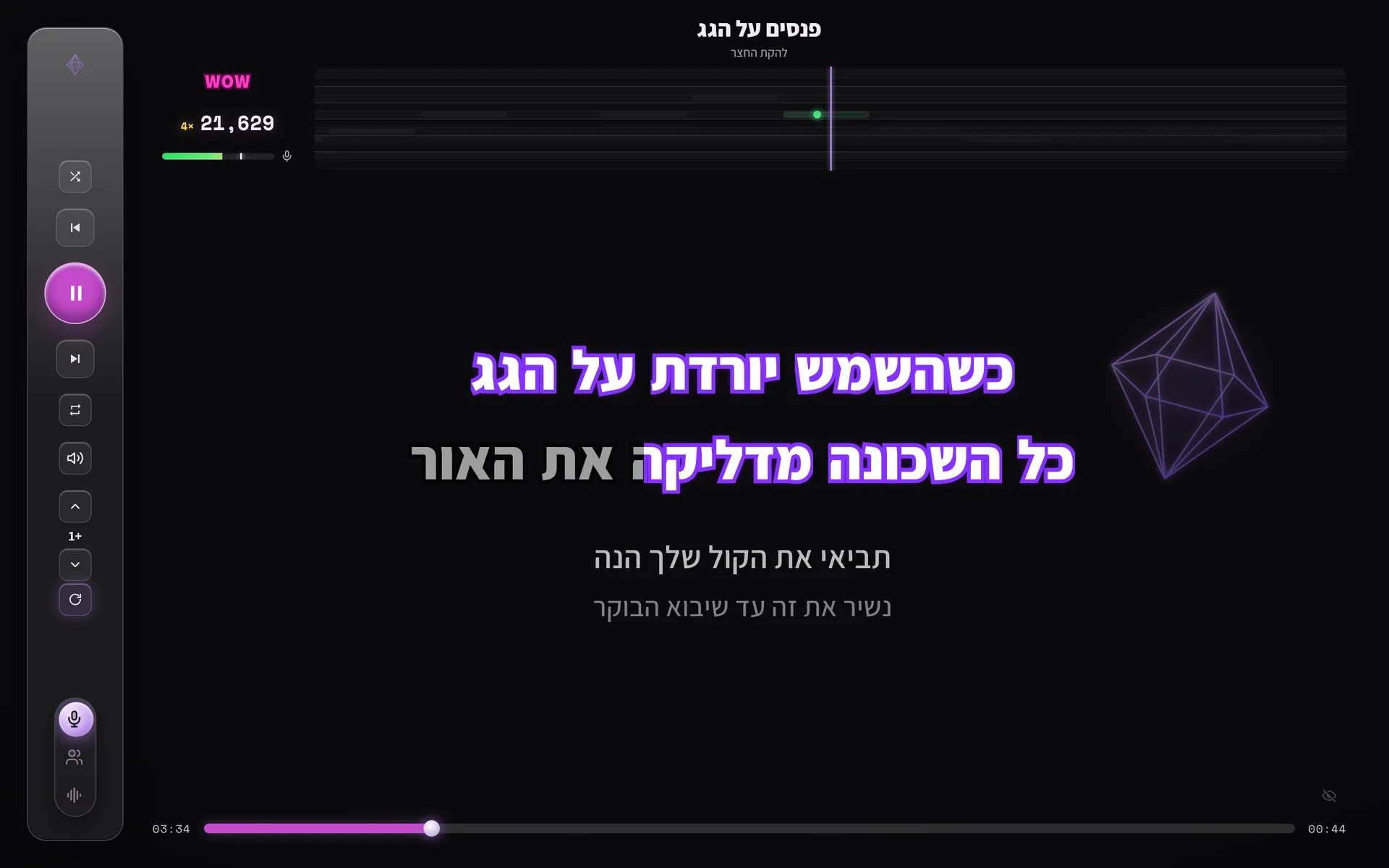
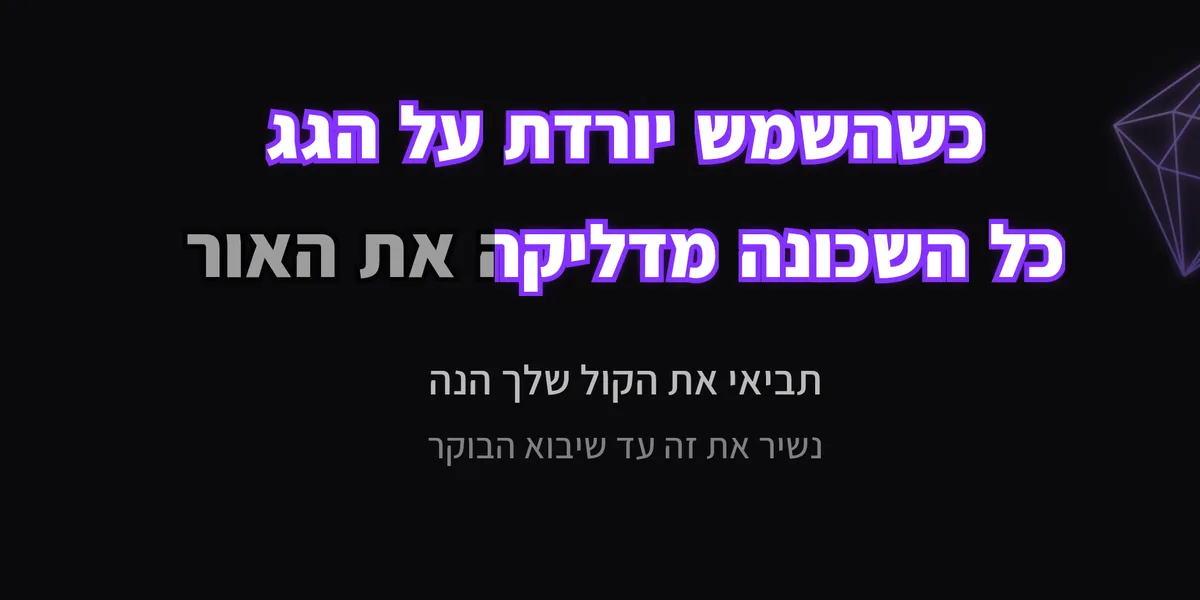
A system I built end to end. A guest scans a QR code, picks a song and a key. In about three minutes the song goes through a six-stage pipeline, including separation into lead, backing vocals and instrumental on a GPU I run, and word-level alignment with a Hebrew aligner I built. The stage is a browser player: word-by-word lyric wipe, live key change and microphone scoring. After every night in front of a real crowd, the product was rebuilt around what we measured.
TheChallenge
Karaoke runs on catalogs: if nobody made a karaoke version of a song, you can't sing it, and for Hebrew the catalog is nearly empty. Separation tools export a file, not a performance, and aligning lyrics to sung Hebrew needed a dedicated model. On stage there's usually an old laptop plugged into a TV, so everything running there has to be frugal.
One night, three screens
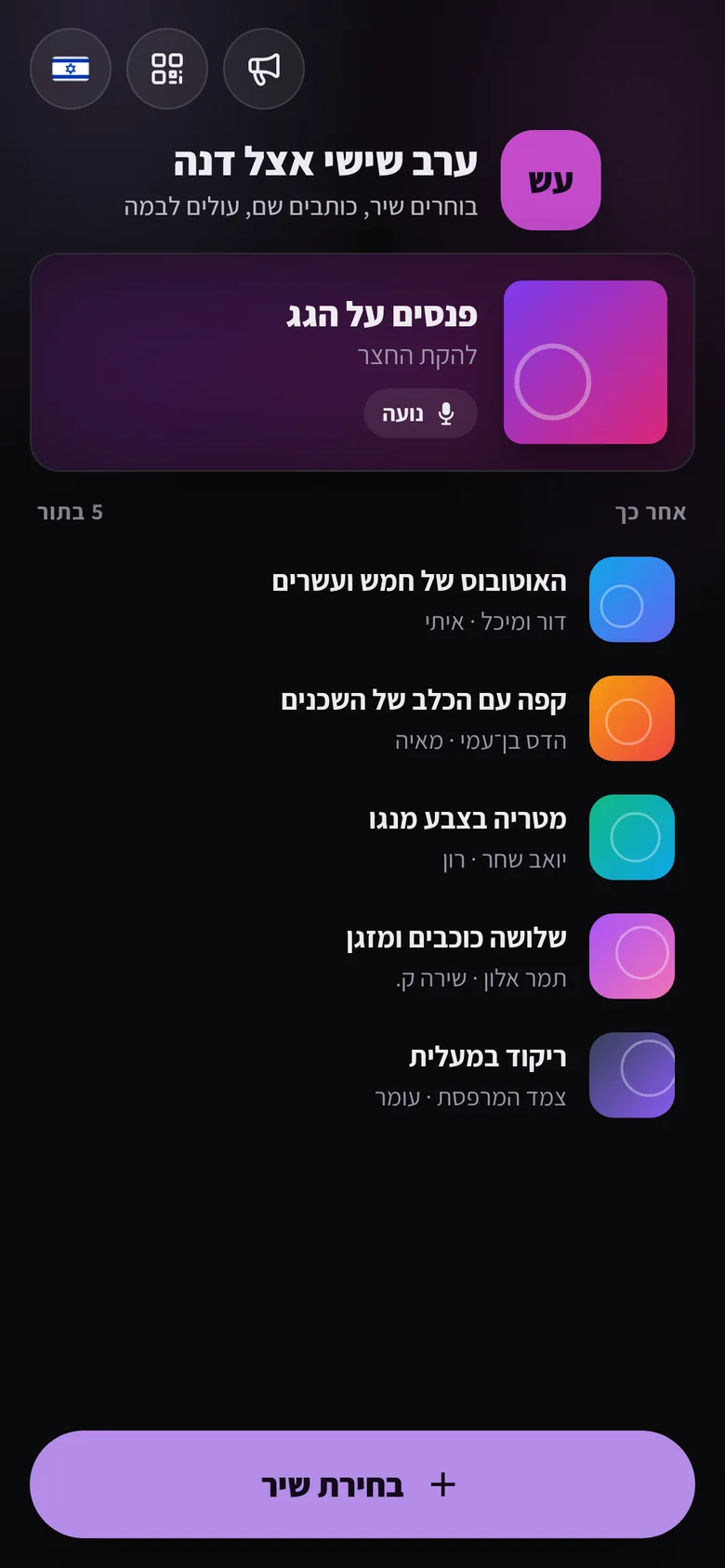
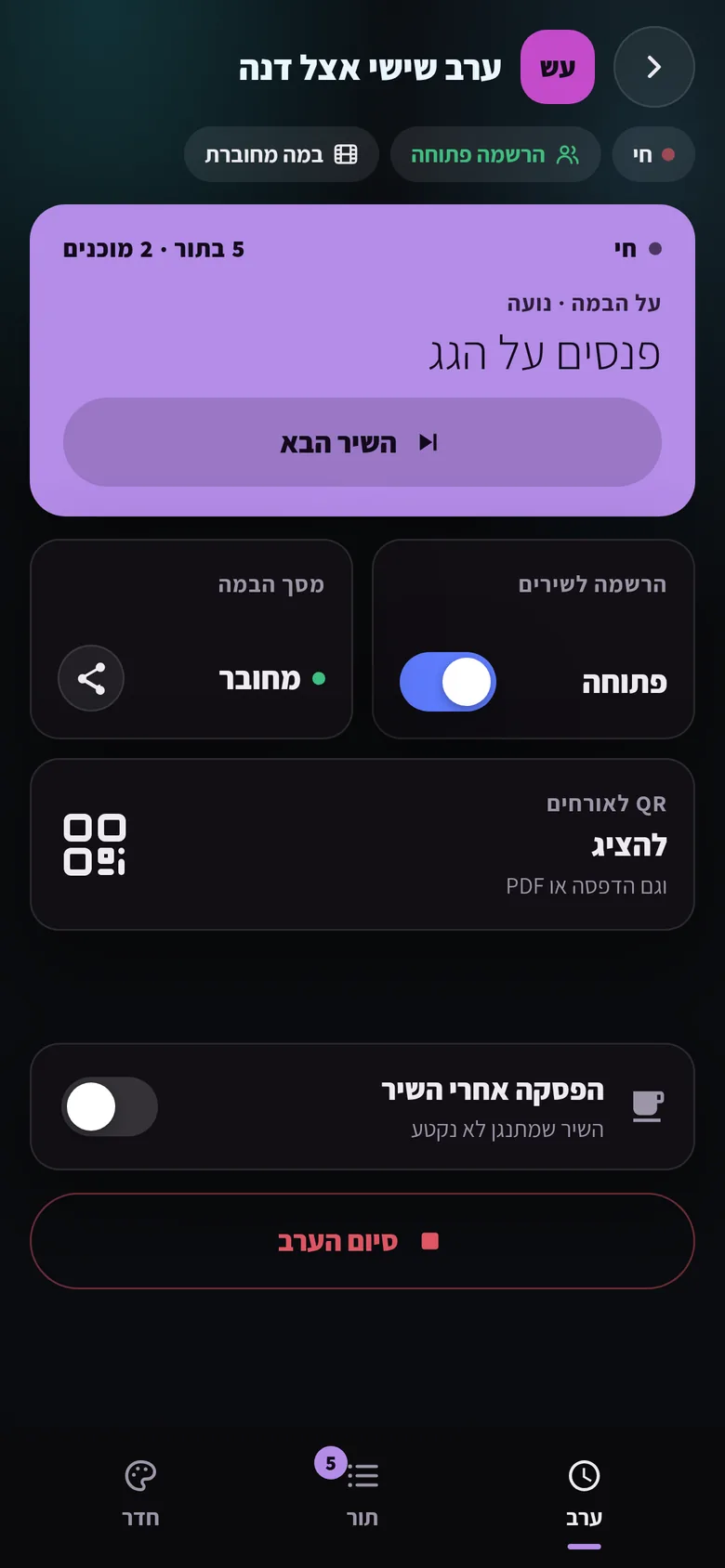
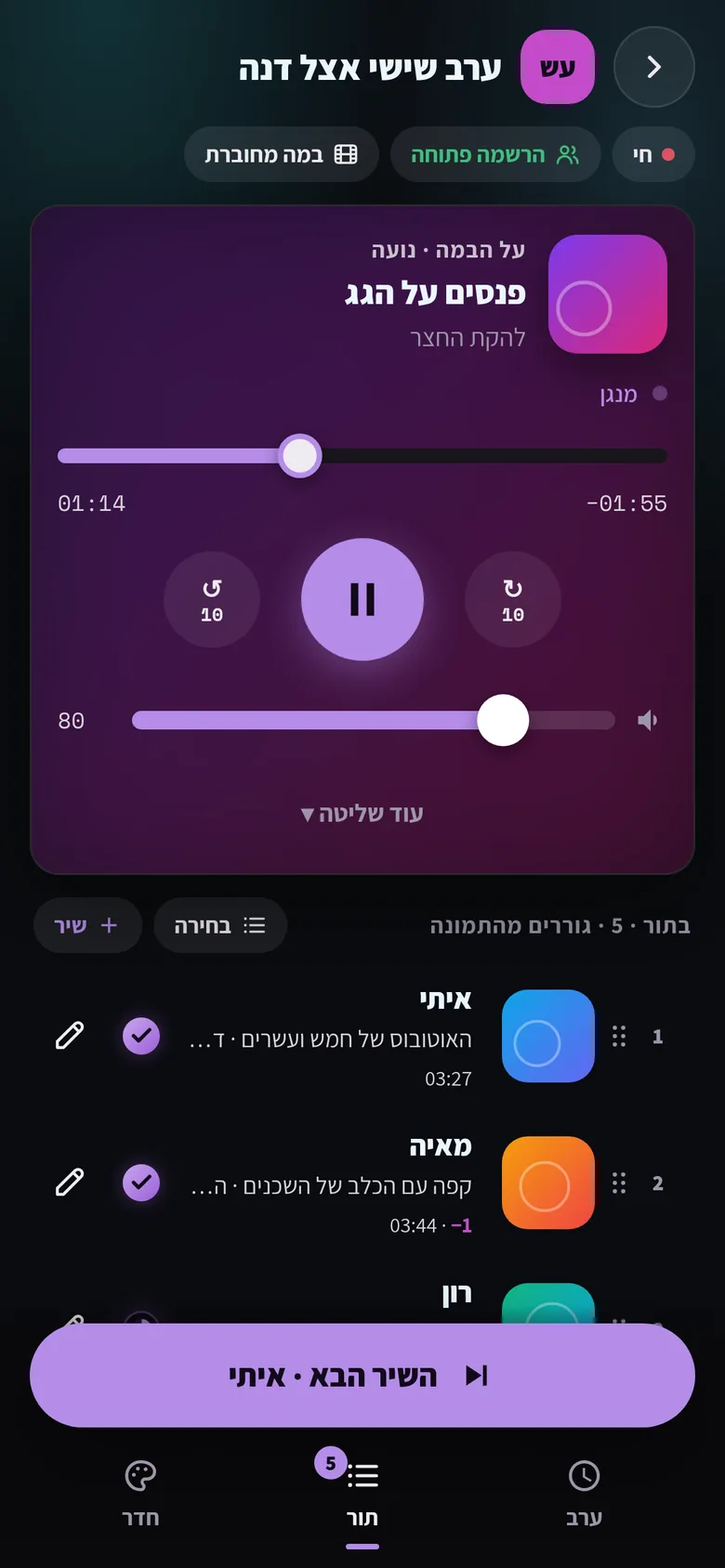
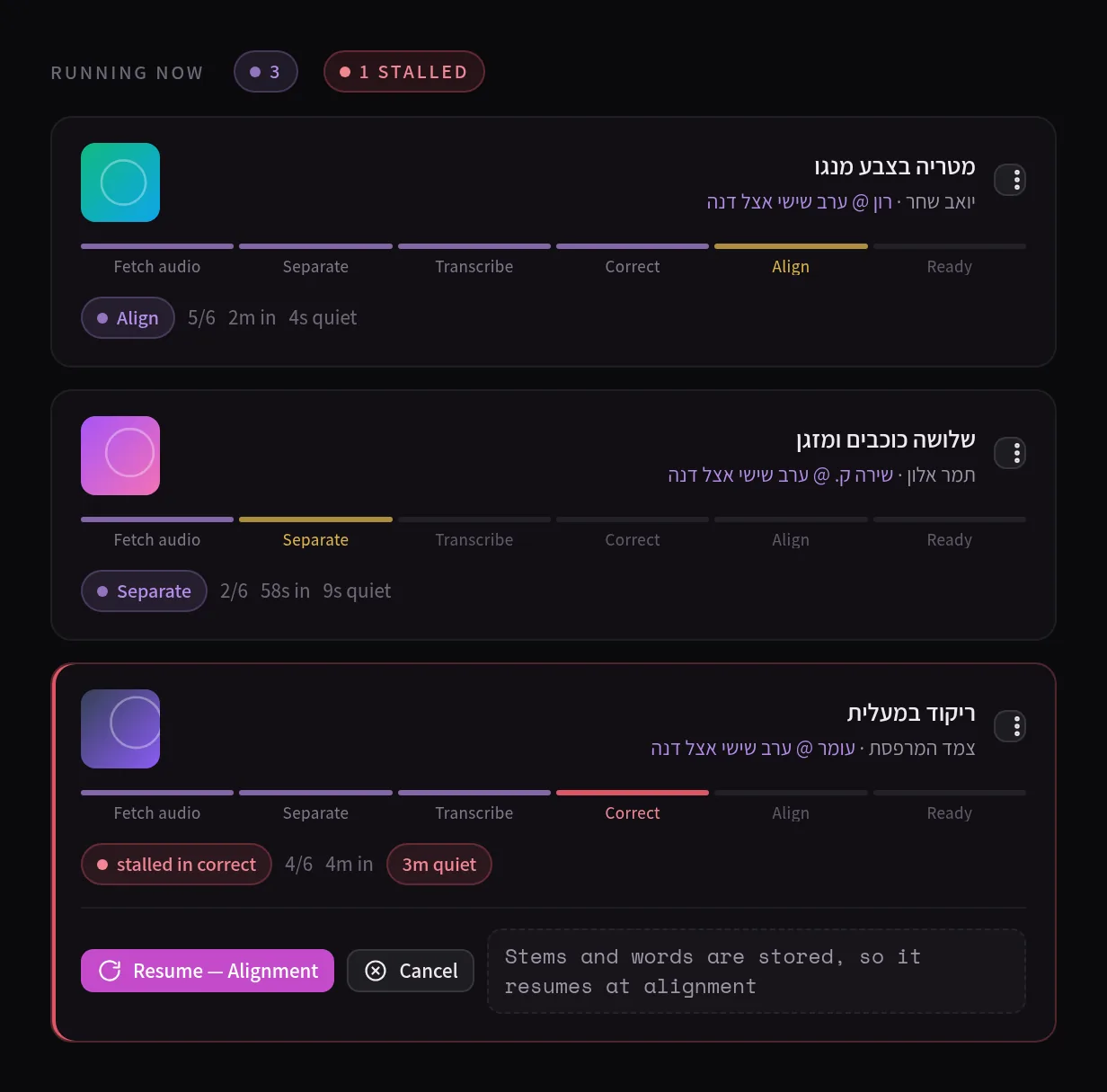
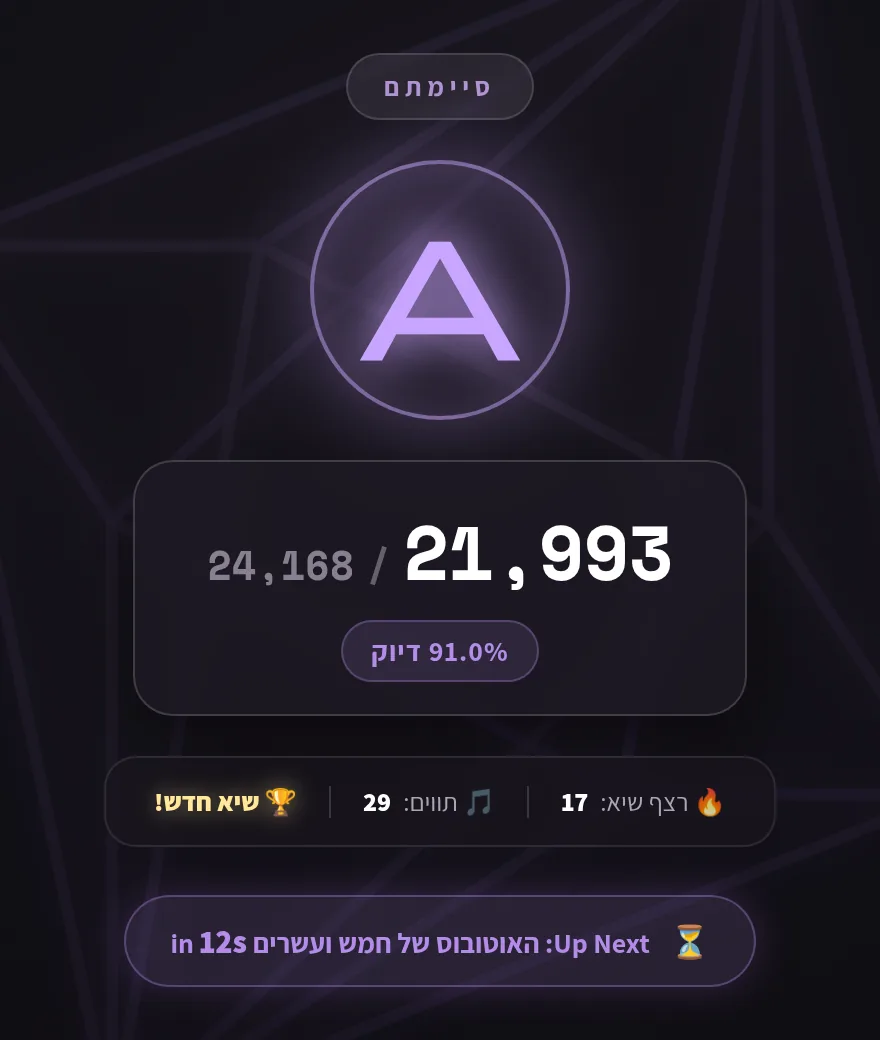
A guest scans a QR code and picks a song on their phone, the host runs the queue from theirs, and the stage runs in a browser on a laptop plugged into a TV. Every screen here is the product's real component, with an invented room, guests and songs.
TheSolution
A system I built end to end. A guest scans a QR code, picks a song and a key. In about three minutes the song goes through a six-stage pipeline, including separation into lead, backing vocals and instrumental on a GPU I run, and word-level alignment with a Hebrew aligner I built. The stage is a browser player: word-by-word lyric wipe, live key change and microphone scoring. After every night in front of a real crowd, the product was rebuilt around what we measured.
- Separation and alignment we builta lead / backing / instrumental separator on a GPU I run, and a word-level alignment model for sung Hebrew.
- Live key change, ±4 semitonesswitches mid-song, and the control reads "a tone and a half up", not "+3". In the original key the engine is disconnected and costs nothing.
- A stage that runs on a 7-year-old laptopabout 60 fps and under 0.1% late frames on every night since late August, measured on the stage itself. Whatever the measurements showed was heavy got replaced.
- One night, three screenshost phone, guest phone and stage. Songs are prepared ahead of the queue; the biggest night so far played 76 songs for 52 singers.
Night after night
The product was rebuilt after every night, around what was measured on stage. The charts follow the same system across 19 nights.
- Late frames on stage under 0.1% for 12 nights running; about 60 fps on every night since 25.8.
- Peak night: 76 songs played, 52 singers (20.10).
- 763 songs played across 19 nights; 3 preparation failures out of 811 queued.
- Up to 50% of a night's songs sung in a changed key.
- Today: about 3 minutes from request to stage-ready; about 3.5 ms audio-to-lyrics drift on most nights.
Soniq
AI-native music platform unifying production, stem splitting, and digital design.